Podcast Guest Strategy for Small Business: Audience, Trust, and What to Ask First
(Upbeat Music)
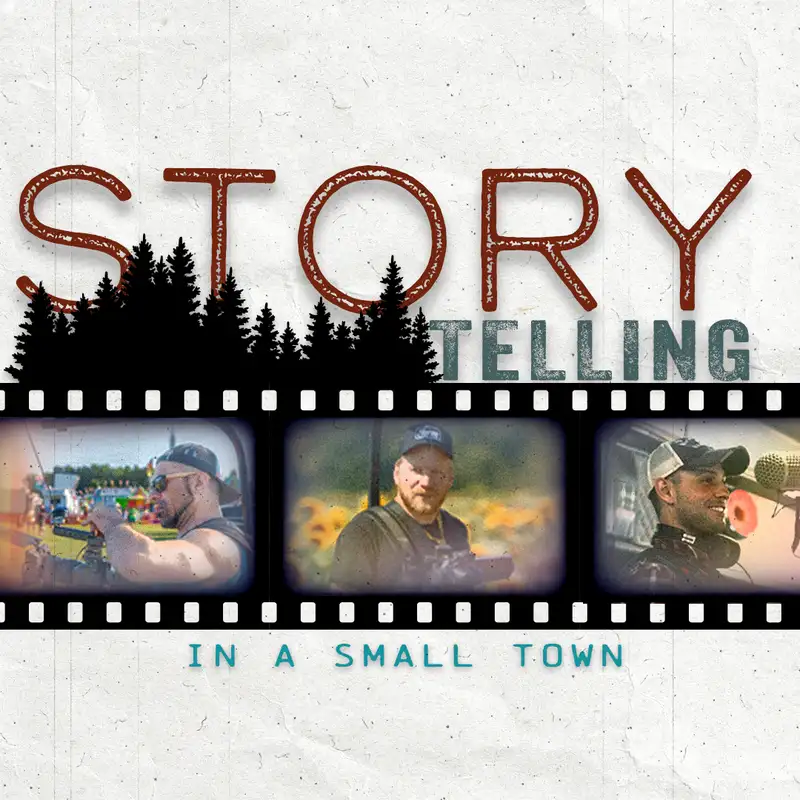
Trent: Welcome to Storytelling in a Small Town.
(Upbeat Music)
Trent: Oh, welcome back to Storytelling in a Small Town. Where? And I feel like the group's extra small today. Right? So it is just AJ and I. Brian has some things that he's been working on and had kind of a bit of a health scare there. So Brian, we hope you're doing well. We miss you. Indeed. And I'm already several days late on releasing an episode. So we kind of missed one. It'll be a month in between these, but and we've all just been busy doing a lot of different things. So nothing wrong with that. And I think these next couple of episodes will be something that's very interesting. It's very hot topic right now. I think a lot of people are,
Trent: I don't know, I feel like it's so inundated in our lives nowadays and you can't really avoid it. Absolutely. And everyone's really thinking about it. Should we tell them what we're talking about or just leave this very vague the whole time? I don't know.
AJ: I feel like it could just be vague book for the time being.
Trent: Very vague book, very vague conversation.
Trent: I promise you we're gonna give you something that is useful and helpful.
AJ: It's kind of like Inception, I think. Another Inception episode. This is very much an Inception episode. Season two Inception episode.
Trent: So we're gonna break down podcasts for business. I really think this is important. There's a lot of great conversations going on around this. A lot of people that I've talked to that I know have questions. So I think it's gonna be really good to have this conversation. And we're gonna break it down into two parts, two episodes. Not because we're looking for things to do. It's because there are two very important conversations, I think, when it comes to telling your story as a small business. Yeah, definitely. So first off today, we're gonna start with being a guest and getting on other people's podcasts. And we're starting with that one because it's a lot simpler and you'll see why we're starting with this when we do the next episode and we talk about starting your own.
AJ: So much to it. It's also like an increasingly common question, right? Yes. A lot of us who are seen as subject matter expertise folks in our field or who are doing cool things, you might just happen to be asked to come on somebody else's podcast and being a contributor for something. And it's always kind of exciting when you get asked to come on somebody else's show. And so what does prepping for that look like? I think that's a good question.
Trent: Yeah, and I think even before we talk to the prep or anything, it's like, let's maybe talk, why would you even wanna be on someone's podcast?
AJ: Yeah, for sure. That's a great question. Why would you wanna be on somebody else's podcast?
Trent: Yeah, there's a lot of them out there, a lot of good going. And I think for me, why you would wanna be is it's a way to help tell your story and also build your audience at the same time. Absolutely. Because you're gonna be going to an audience that might cross over a little bit more than likely this podcast is gonna have a very different audience. There's also so much research out there about how podcasts audience is very different than a lot of other media forums. So actually going to podcasts, you're gonna reach a very different audience than you would with your traditional marketing forums. So going out there, you're hitting a different audience because it's a different person, it's probably not someone in your business. And two, just the kind of people that you're gonna reach are very different than traditional marketing kind of hits a lot of times. Interesting.
AJ: How would you qualify kind of the difference between like say like your social media audience, like your purely social media audience and your podcast audience, like your platform audience?
Trent: Yeah, so the difference between like the social media audience and the podcast audience, social media, it's a lot of quick scrolling a lot through there. It's, I think a lot of different age brackets. It's also very more focused I feel because it's all, and there's so many algorithms that go into it. When you're going after people that are looking at podcasts, the demographic is generally higher education, higher income. They also are more likely to be engaged in like an engaged audience I would say, because you're spending hours out of your day to listen. So it's not someone that's just scrolling like, oh, let's go give you a heart. It's like they actually have to commit time to listen to that person and see what's there. So it's just, they're also coming in with a different mindset and they're processing the information very differently.
AJ: That's really interesting. So from the social media side, you really sort of get the presentation of podcasts in this much more like compact reels type format, because that's really where we're seeing it most of the time in the scroll is in this short clip, short form format. So that really kind of varies how the impact of it is. You really only get these like sound bites for the most part in socials versus a full engaged audience with your podcast platform. I think that's a really cool kind of variation in between the two things and kind of helps you think about how your presentation is going to be seen as a guest, right? Because you will be in these sort of short clips on social media and on Instagram and Facebook and whatnot. So it's almost like marketing driven in a way, it seems like to me.
Trent: Yeah. And there's a lot of people that take advantage of that too. So that's the other reason, like as we dive into this kind of research, who the podcast is about and what they're trying to do, because there are a lot of podcasts and I've heard from other people that like, yeah, come on my podcast. And then they're trying to pitch and sell you their product or I've been approached from doing stuff. Hey, be on our podcast, but this is basically marketing for you. So you need to pay us X number of dollars. Wow. Yeah. So that's the thing like, like you really need to think about too, as you're going all on and be getting out there, right? Like obviously you wanna go and support your community. You wanna go and help these podcasters, but really think about who it is. If it's just a random national corporation is reaching out to you about something, you might wanna double check their emails. You might wanna be certain about it and make sure do your research because there are a lot of scams out there too with podcasting. So it's really important to kind of do that research, make sure who you know and if this is something you support, also make sure it's worthwhile for you. Like if you're going like, hey, there's a deep sea diver that wants me to be on his podcast. I'm a boutique owner in Snohomish. Does that make sense? Like sometimes you need to think about that. Don't just get caught up in the hype of like, oh, I get to be on this podcast. Make sure of like, is this gonna benefit me? Is this gonna maybe introduce me to a new audience? Right. Things like that, right? Like you really need to think about that because otherwise you can tell your story, but it's not necessarily going to help with your brand or no one's gonna see it too. I think that's the other part. Like when you talked about marketing side of it, this is a huge marketing opportunity for you. Whether it's a local small podcast or something that is bigger that really aligns, your brand's getting out there and these short videos, people are gonna connect and get to know you as a person too. Like we talked about so much earlier in the season, we talked about creating those story, those kind of intro stories for your brand and everything. This is another way you can do that and tell those stories. So a lot to think about there, even as you're choosing what to go on.
AJ: It's interesting how you describe that because for me, I frequently think of being a podcast guest or contributor in terms of more of like a singular person's brand and how that helps establish their authority or their sort of perceived status in that field or in that world that they operate in. And so it's kind of interesting to think about it from the side of it as, if I come in, I'm here as AJ Soto of the Soto's photos versus just me, AJ Soto, the videographer, and how I'm going to structure the conversation that we're going to have to support that in talking about my business and talking about what we do versus how I'm gonna speak about myself specifically. So the thing was kind of another variation. Are you coming as yourself or are you coming as your business or your organization, your nonprofit, who are you coming to represent and how are you gonna structure your conversation around that?
Trent: That's a great indicator, right? Because I think especially if you're small, I'm thinking of like a lot of small businesses, a lot of the boutiques down here, you really can't separate yourself. Like me trying to separate myself from my business, it's synonymous right now. Again, if you're coming from a bigger corporation, have multiple members of your business, maybe you have to think more about that. But if you are a business owner, it's kind of tied to you. So even if you are going on there as an expert, people are gonna connect with you, they're gonna see that. And ultimately, again, even if you're not trying to represent your business, if they're connecting, making a connection with you as the person, and then they say, "Oh, you own this company," it does positive impact for you. And when you get into the nonprofits and these bigger organizations, yeah, you hit a very fine line of when you're going in there of like, am I representing myself? Am I representing them? Because what you say, how you say it, has such a bigger impact, right? Oh, this is just me and my business. It's like, I impact the thousand people that work for this business. I impact the whole work that we do. And if I say something wrong, or I'm not giving that perception, you become a temporary kind of spokesperson for those units, one way or the other, right? If it's brought up at all that you work for this organization or something.
AJ: Yeah, it's funny, you can almost unintentionally become a thought leader without really meaning to, or without really putting the focused effort into it. I have a family member, my wonderful father, who works in the tech industry, he's worked in tech for a long time. It really, you talk about self-made people, he learned how to code from online classes and then went to school for it and moved away from being an editor in the publishing world to doing tech industry stuff. And he was asked to come on these guys' podcast as a data engineer contributor. And he's worked on lots of side projects and things like that over the years, but I feel like going on that show, and he's now been on it, I think three or four times, he has sort of built this additional sort of self-branded authority about where he sits in the data engineering world. And I feel like he has people coming at him for different kinds of projects. Can you build this app for me and stuff all the time in different capacities? And I think it might actually be a little bit overwhelming at times now because your focus can only go so far, but there's totally success stories to be had here in ways that you may not even really think of them just by being a guest and kind of putting yourself out there and letting somebody else introduce you. There's also, if somebody is coming at you as a podcast guest and you already have a following, you already have some established social media following, don't forget that they are also using your following and your audience to benefit them. There's a kind of crossing thing that takes place here. So that's not the point of this conversation, but just don't walk into that not knowing that.
Trent: Well, and I think that's really important too, right? Because when we talk about, I've been learning this really well, but when we talk about building these businesses, building these entities, it is sharing that, right? Like, hey, they might have a bigger audience that I can pull in that will help my business. You're doing the same to them, right? It's like, hey, when it comes to podcasting, it's all about those numbers, unfortunately, because no one's gonna see it, you don't get pushed. There's a lot of stuff that doesn't happen if you don't get those listens. So that's another reason to really be conscious of what podcast am I saying yes to, because you can impact them and help these people. And if it's someone that's like, I don't trust them, doesn't work well, you suddenly set that up, you have that, and you kind of subtly endorse them by going on there, right? So it just becomes a lot of around your brand and the story that you're telling goes into supporting.
AJ: Absolutely, I think that that's probably something that doesn't get talked about really maybe often enough is the trust level that needs to kind of exist there between you and your brand and the host and their brand.
AJ: And I mean, this might just be simple things like, do you align with their values that are publicly put forth on the show, whatever they may be, whatever that is, do you agree with the stuff that they're saying? Is it controversial and causes you some internal misgivings and maybe you don't wanna be connected to that or you don't want your brand to connect into that more importantly. But on the sort of the other side of that, is there the trust that if I go on the show and I tell my story about working with Red trucks are they going to cut and edit that in some manner that makes it seem like, I said Trent was a big jerk or something like that, are they going to misrepresent me? Is there some reason why they may want to do that? So there's just tertiary concerns.
Trent: Yeah, no, and I feel like- Trust concerns. Hopefully we're not scaring anyone away. You should go on and definitely support these on a lot of podcasts and again. Absolutely. I know in this community, there's so much connection that everyone kind of knows everyone that has the podcast and you've had a connection with them for a while before you go on and things like that. So it's like, don't be too scared of it, but just be aware that these are things that happen. And maybe we can go over some things of like, if you're being asked to be a guest and you end up going on set, what are the things that are like, okay, this is becoming a red flag. Because I think that's really important too of the way people are handling themselves. You can kind of tell like, hey, is this gonna be a good value? Is this going to be a good quality product? Because that's the other thing too, that doesn't hurt you necessarily, but it doesn't make it as good of an investment. If you go on there and even like, let's say you're doing a virtual one because that's really common, really popular. Yeah, totally. And your mic and you can't hear them, there's a lag between everything.
Trent: That can be your sign that like, okay, maybe this isn't the right way to do this, right? And they're just like, yeah, we're gonna put that out. And you're like, I was glitched half the time. How do I know any of this is actually gonna go through?
AJ: Does the production quality look like what you would expect? Something else I think I tend to look at, and this just doesn't matter if we're talking about podcasts or just like regular clients or whatever the situation is, I always do my own due diligence. And that tends to involve things like, looking at how they respond to comments and things like that. What is the tone of their social media presence? That's a big thing. Social media personality says so much about a brand. And so like, that is a pretty clear indicator. If they are whimsical in the way that you like, or if they are serious in the way that you like, whatever it may be, I think that can be a good sort of referendum about whether this is gonna be a good situation or not. And some of that's like, they post something about a topic that people are really engaged with and how do they respond to those comments? Are they interacting with them in a manner that's positive, that's a growthful, or is it a bloodbath in the comment section?
Trent: Yeah, yeah. No, those are all great things to think about. And I don't know why you just jogged like all these other things to my mind. I'm like, really make sure you have these or else it's gonna be kind of a bit of a red flag.
Trent: One, before you even get on, before you start recording or anything, at least make sure they mention about a release form. Ah, yes. Just because that puts in writing that says, hey, we're able to do this because it just shows they have their stuff together. They're following the rules or following whatnot because it just tells you a lot about it if they have a release form.
AJ: At least an indication that they have some sense about the legal machinations that are involved with podcasting or video work or creative work in general. Absolutely, so good.
Trent: And this is a big one for me. I try and do with all of my clients that come in here and any of the guests with my clients is I'm like, hey, we're going along, this isn't live. So if you need to stop, make sure they're making you comfortable and understanding what's happening. It's like, if you say something you don't want to, let's try it again, right? If they don't have that willingness to be like, oh, we want this to make sure this sounds good for you and putting in that effort or just helping you understand what this is, especially if you've never been on a podcast, you're not gonna feel comfortable. You're not gonna give answers and things like that because going along with that is don't be afraid to ask questions of like, what about this? Am I allowed to interrupt? Like, if I don't like this, can we move something out? Can I review it before you put it out? Depending what type of agreement you have with them, some people, it's more of like a new style or something. It's just like, it's gonna go out as it is and just rework your questions. But you have to be vocal as part of it as a guest too. Don't just assume they're gonna have your best intent in mind. They're gonna do everything there. If you finish saying something, you're like, wow, that was really not what I meant to say. Physically say that, like, hold on. That is not what I meant to say. Can we say that again? Totally. You have that power and you need to make sure that represents you, right? Like so much what we're talking about with this is as a guest, you wanna make sure it represents you and being able to do that properly. Cause none of it's live. It's not live to, well, maybe some people have- It could be live. Yeah, some people could be live and large majority aren't. So don't be afraid to ask those questions.
AJ: I think a good sort of summary of that kind of whole box of that idea is that there is a partnership that exists in a good podcast relationship. And that means that there's room for everyone to be comfortable and for the grace to exist for us to goof up if we're not in the live environment, or even if we are live and to figure that out.
AJ: What we had an episode, what last season where I completely botched saying something about lighting and I'm pretty sure we just cut it all together. I don't think I made it in the cut. And like, that was a time where, whatever I was thinking about, I just rattled off something and didn't even like really listen to what I said. And would have technically like undermined my own authority in the show if I hadn't caught it and then Trent cut it out. And knowing full well, like this was just an ad Neo, an accident. And so there's, you want to be aware of how it's making you look and that the partnership, this relationship is respectful of everybody that's involved and that's, it's really just a respect thing I think.
Trent: When I said it better myself, I really liked the way you said that. Cause I think this is kind of a good point to stop at, like I think we've kind of hit a lot of this. There's so much there. Please reach out to us if you have more questions about this, if you want someone to come in and be like, hey, I think this is going or review like, hey, someone asked me to be on this podcast. What do you think? It's like, we can kind of tell you how it'll go one way or another.
AJ: Yeah, absolutely. Yeah, happy to consult about stuff like that too. If that's helpful, we can help you with, thinking about what you're going to say or your scripting or presentation, what looks good on camera.
AJ: If you need to come by Trent's studio to take a look at yourself on camera and do some practice posing or some role play or something like that, to get yourself comfortable with being on camera or even to hear yourself, to hear yourself on audio.
AJ: There's totally ways that you can get a grasp on this in a comfortable environment where you have help. And so don't forget.
Trent: Yes. Don't forget. Yes.
Trent: Don't forget all those options. I think another option you can look at, it's meant more for the second part of this podcast, but I'll plug it here now, is the Snohomish podcast playground is another podcast I do that is very specifically about how do you create a podcast, what it's like. And it's really about playing and having fun and just you've got to try it and do it. And I think that just emphasizes what you said of, don't wait till you're doing your podcast to figure out what you sound like, look like, do all this practice at a head time, even if it's with your phone and your spouse, your sibling or someone just asking you those questions and getting you kind of ready for it so you know what's going into. Again, some people are great with it. Some guests are great where it'll just feel like you're having a conversation on a sofa. And that's awesome. And sometimes you want to feel a little more prepared if it's someone bigger, if it's someone that you're not as familiar with. So don't be afraid to play around, have some fun and test it before you go there. And ultimately, I hope what this is showing everyone today is being a guest on a podcast has so much influence. Like it has very powerful thing that you can do for your business. Usually it doesn't cost you anything. If it does cost you something, you should be asking a lot of questions before you go on and spend any money on it.
Trent: And yeah, it can be such a great thing for your business. And I know we hit on a lot of things that sounds scary and we just want to make sure you're prepared as you're telling your story, as you're going through this, it's working for you and your small business.
AJ: Yeah, just prepare yourself for the power that you may have that comes along with it and think of it appropriately. The very first time that I told somebody, I was like, "Oh, you're just like, what do you do?" And I was like, "Oh yeah, I do this." I'm a videographer. I was like, "Oh, and also I'm a contributor on a podcast. I'm on storytelling in a small town with Trent from Breadtrucks and Brian Harmon from Snowmish Film Co." And people looked at me like, like I thought you produced a podcast, which I also produce a podcast, but they were like, "Oh, you're on a podcast. Like you're one of the co-hosts of a podcast." That's a totally different vibe to people when you're discussing the stuff that you do. It immediately lends itself to a certain level of authority. So it's definitely different.
Trent: Yeah, get out there. And I think the other thing too, why I go into all of these details about it is, I know, you know, our time as business owners, solopreneurs, it's very valuable. So it's like, you don't wanna be wasting your time going on these podcasts and doing stuff. It flies. Right, cause it's at least an hour to do the podcast, no matter even if they say it's a short one, you're gonna be at least not recording, getting there, all this other stuff. So you should time wisely, have fun though. When you do pick one, go for it, have fun. And just, yeah, remember the influence you have and the impact that can really have. So yeah.
AJ: Oh, are we still doing closing words of wisdom? Yeah, do you got one? Yeah, I got one. Unless you are one of the absolutely fantastic co-hosts or guests of the UMSR podcast, you should try to not work a lot of UMS in there like I do and make current life difficult.
AJ: Make your editor's life difficult. Make your editor's life easy. Don't um, it's much better.
Trent: Yes, well, maybe we'll talk into more of that, but I think that hits so well on what you're talking about too, of practicing your wording and being comfortable with those pauses and getting through it without a lot of those filler words. Absolutely. So a lot to think about on this one. We appreciate you joining us. And next time we will be back talking about, if you wanna start your own podcast, what does that look like? And I'm excited. I'm excited. It's gonna be a deep one. I'm excited about one. See you next time.
AJ: Bye.
(Upbeat Music)
Creators and Guests